
Imagine you walk into a giant library. You ask the librarian a simple question: “What is the best way to bake sourdough bread?”
A few years ago, the librarian handed you ten sticky notes with shelf numbers. You had to walk down ten dusty aisles, open ten heavy books, and hunt for the answer yourself.
Today, the librarian simply looks you in the eye and gives you the exact recipe in thirty seconds.
That is what Google did.
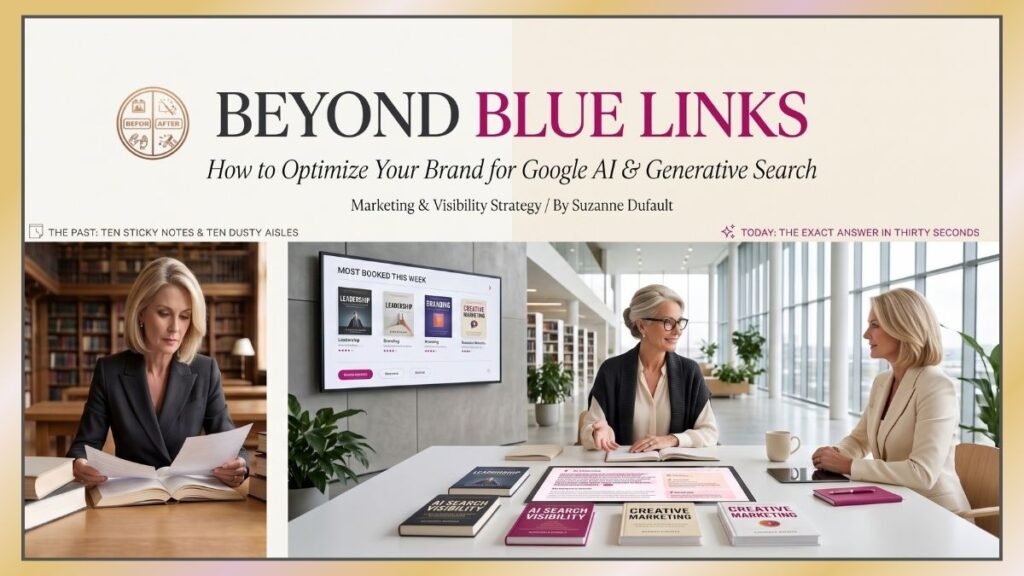
Search is no longer a list of blue links. Google now acts like an answering engine. When people type a question, Google summarizes the answer directly on screen using AI Overviews.
If your website only targets old keyword tricks, your traffic drops. But if you learn how Google AI search visibility works, your business becomes the trusted source the AI quotes.
1. Why Google Swapped Blue Links for Direct Answers
For twenty years, online business followed a predictable playbook. You found a popular search word, stuffed it onto a webpage, and waited for visitors to click.
However, search behavior changed completely.
People no longer want to click ten links to solve one problem. They want the direct answer immediately. Because of this shift, Google introduced Generative Engine Optimization, or GEO.
As the search team explains over at Google Search Central, helpful content must solve real human questions with genuine expertise. The search engine evaluates whether your site delivers real-world depth or just hollow fluff.
When an AI engine reads the internet, it asks three quiet questions:
- Does this author actually know what they are talking about?
- Is this answer easy to summarize clearly?
- Can I trust this source enough to recommend it to a reader?
If your site sounds like a robotic copy of everyone else, the AI ignores you. But when you share authentic lessons and clean answers, your brand stands out.
2. The Big Mistake: Keywords vs. Entities
Most online creators treat search like a vocabulary test. They sprinkle phrases across a page like seasoning on soup.
In contrast, modern AI search treats the web like a network of real people and ideas. In computer terms, this is called an entity.
An entity is simply a distinct, recognized thing with a clear identity. You, your business, your specific framework, and your signature services are all entities.
Let us look at a simple side-by-side comparison:
- The Old Keyword Way: “We provide global enterprise software solutions for supply chain management looking for inventory optimization consulting.” (This sounds stiff, repetitive, and empty.)
- The Modern Entity Way: “We help retail brands automate warehouse inventory in real time so logistics teams eliminate delivery delays during peak seasons.” (This tells Google and your reader who you are, whom you help, and the exact transformation you deliver.)
During my years leading corporate merchandising teams, I watched companies spend millions chasing fads after they had already peaked. Online marketing makes the same error. Founders guess what people want instead of verifying actual market behavior.
Before you write your next page, check live search volume on Google Trends. See what real people actually ask right now. When your brand answers real questions with first-hand experience, you establish genuine topical authority.
Sharpen Your Content for the AI Era
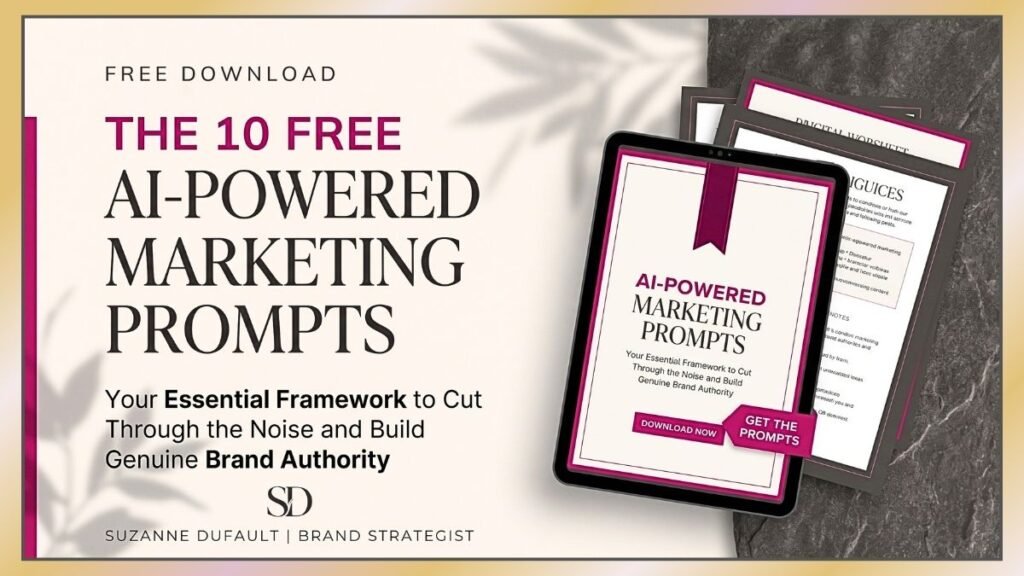
Generating bland, predictable copy will get your brand bypassed by modern search engines. To be recognized as an authority, your messaging needs distinct structure, depth, and clarity.
Download the 10 Free AI-Powered Marketing Prompts
Use these curated frameworks to prompt smarter, elevate your brand voice, and craft content that commands attention.
3. Step Blueprint for Generative Engine Optimization (GEO)
To help AI search engines quote your website, you must design your pages for clear extraction. You do not need complicated technical tools. You only need clean architecture and clear thinking.
A) Give the Answer in the First Two Sentences
Do not hide your wisdom behind four paragraphs of background story. Start each section with a direct, plain-English conclusion. When you state the answer immediately, search crawlers can easily pull your sentence into the AI Overview summary box.
B) Format with Scannable Structure
Long walls of unbroken text exhaust human readers, and they confuse AI parsers. Break your insights into bite-sized components:
- Clear subheadings framed as real questions.
- Bullet points that highlight tangible takeaways.
- Short sentences that move the reader forward briskly.
If you recently updated your visual identity with our guide on how to stand out online with brand colors, fonts, and copy, you already know how clean layout creates visual calm. That exact same layout makes your site machine-readable for AI crawlers.
C) Share Real Business Lessons Nobody Can Fake
Generic advice is everywhere online, but basic tips have very little commercial value because computers can summarize them in seconds.
However, search engines look for something machines cannot generate: your personal point of view.
Google measures this using E-E-A-T. That stands for Experience, Expertise, Authoritativeness, and Trustworthiness.
To build genuine trust with both readers and search engines, ground your writing in your actual track record:
- Share the Real Behind-the-Scenes: Tell the story of a client obstacle you solved last week or a costly mistake you avoided earlier in your career.
- (Example: Mention how a client almost ordered thousands in wrong packaging until you caught the sizing error, saving their entire product launch.)
- Show Your Work: Real-life examples prove that you actually did the work, rather than simply repeating textbook theory.
- (Example: Instead of saying “create a clear navigation menu,” show the exact 3-step menu restructure you implemented to cut bounce rates by 30%.)
If you use an AI assistant to help draft your articles, do not ask it to write from scratch. Instead, feed it your real-world experience first so your voice stays completely authentic.
Here is a simple prompt you can copy and use right now:
The E-E-A-T Authority Prompt:
“Act as an editorial writer. I want to write a blog post about [your topic]. Do not write generic tips or corporate buzzwords. Interview me first: ask me 3 direct questions about my real-world career experience, a specific client obstacle I solved, and one common industry mistake I disagree with. Once I answer, use my exact stories and lessons as the core proof for the article.”
When you back up every concept with lived proof, search engines recognize you as a verified authority, and your readers immediately know they are learning from a real pro.
The Verdict: Build to Be Cited, Not Just Clicked
Winning in modern search isn’t about chasing algorithmic shortcuts or stuffing keywords into bloated web pages. It is an intentional positioning strategy.
When you structure your website with genuine first-person insight, disciplined clarity, and undeniable subject-matter depth, you solve the exact equation AI engines look for. You shift from chasing unpredictable search traffic to becoming the definitive, trusted source Google references by name.
Robotic content gets summarized and forgotten. Authentic authority commands the answer.
Warmly,
Suzanne Dufault
Brand Strategy & Web Design
https://suzannedufault.ca/
P.S. The 30-Second AI Authority Check

Think of the most common, high-value question your ideal client asks before hiring you. If Google were tasked with answering it right now using only your website, would it find direct, unambiguous expertise, or generic industry filler?
If your core pages sound like everyone else in your space, the AI will bypass you. Don’t leave your visibility to chance. Explore our Strategic Brand Re-Architecture to build a high-contrast, authority-led digital presence engineered to establish trust and command market respect.