
Rihanna Fenty Beauty Brand: A Masterclass in Inclusivity and Category Disruption
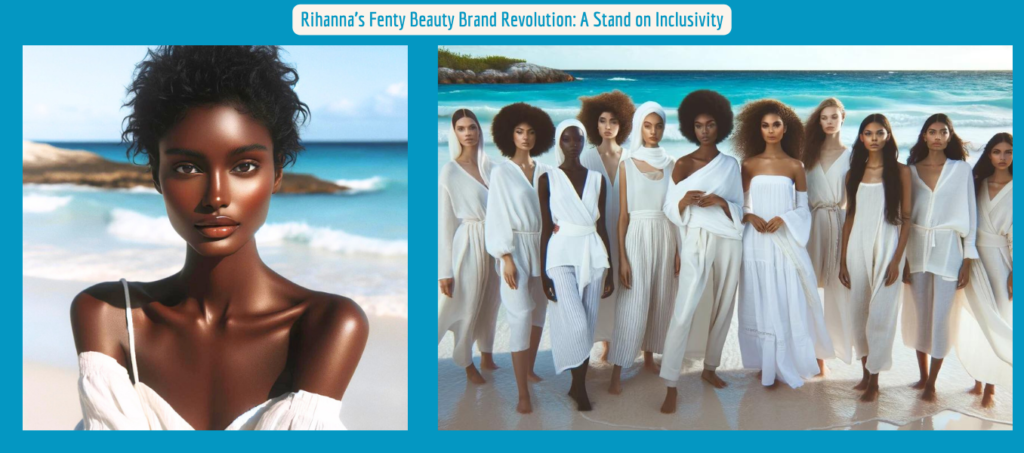
During this time, I watched legacy names spend fortunes on narrow audiences. As a result, they ran repetitive campaigns and tweaked minor details. As a result, they ran repetitive campaigns and tweaked minor details. They ran identical promotional campaigns, tweaked minor packaging details, and wondered why their market share eroded. Yet, examining the rise of the Rihanna Fenty Beauty Brand reveals how true market leaders never compete inside existing lanes—they uncover systemic market omissions and engineer entirely new categories.
When Rihanna launched Fenty Beauty in September 2017, legacy cosmetics conglomerates assumed it was just another celebrity endorsement. Within forty days, the beauty brand generated over $100 million in sales, completely upending industry conventions and setting an unmatched global benchmark.
As an executive founder or strategic advisor, you might ask: How does a modern beauty brand dismantle established market incumbents without entering a noisy shouting match?
The answer is not louder marketing, superficial social media trends, or discounting your fees. Rihanna’s Fenty Beauty succeeded through deliberate brand architecture, systemic inclusion, and disciplined visual restraint. Here is how strategic leaders engineer category disruption that commands premium market authority.
1. The Behavioral Paradox: Why Playing It Safe Breeds Market Invisibility

In behavioral psychology, traditional market research frequently misleads decision-makers because people default to familiar answers when surveyed. For decades, legacy conglomerates in the beauty industry treated foundation shades for deeper skin tones as an unprofitable niche or an afterthought reserved for secondary inventory runs.
By treating the mainstream market as a monolith, incumbents created an immense perception gap. Discerning consumers felt underserved, forced to blend custom mixtures or accept subpar alternatives.
When the Rihanna Fenty Beauty brand entered the market, it did not introduce three or four token shades to satisfy a trend. Rihanna launched her beauty brand immediately with 40 distinct foundation shades (later expanded to 50), covering an unprecedented spectrum of undertones.
The Operational Reality of Strategic Positioning
The Rihanna Fenty Beauty brand didn’t just sell cosmetics; it exposed the operational complacency of every legacy beauty brand.
- The Incumbent Trap: Legacy players attempted to cater to everyone with safe, homogenized palettes, ultimately exciting no one.
- The Category Creator: Fenty engineered an undeniable category position by identifying a massive, neglected segment and elevating it to the center of the brand narrative.
In your advisory business, the lesson applies directly: when you attempt to speak to every general prospect, you dilute your authority. Discerning clients do not want generalist helpers. They seek definitive expertise tailored to their operational reality.
2. Structural Brand Architecture: How the Rihanna Fenty Beauty Brand Communicates Premium Value
For decades, legacy conglomerates treated foundation shades for deeper skin tones as an unprofitable niche. In fact, these products remained secondary inventory runs for years. In luxury retail, space equals value. While bargain department stores crowd aisles with neon discount signs, high-end flagship showrooms rely on generous negative space, intentional lighting, and visual discipline. They sell far more by saying far less.
As we explored in our guide to website architecture for premium brands, visual restraint commands respect while visual clutter repels discerning clients.
As an iconic modern beauty brand, Fenty Beauty executed this exact quiet luxury discipline across every digital and physical touchpoint:
Fenty Beauty executed this exact quiet luxury discipline across every digital and physical touchpoint:
Visual Restraint in Brand Execution

- Curated Palette Discipline: Rather than chaotic, multicolored packaging, this modern beauty brand adopted architectural, magnetic matte-nude compacts and minimalist typography. The visual language whispers luxury while remaining universally accessible.
- High-Contrast Digital Layouts: The digital flagship leveraged editorial layouts, wide margins, and high-fidelity photography, allowing product textures and diverse skin tones to command full focus.
- Consistent Sensory Touchpoints: From unboxing to digital checkouts, every interaction feels coherent, premium, and unified.
As strategic research from Harvard Business Review confirms, aligning core organizational values directly with product design and operational architecture creates an authentic moat that competitors cannot easily replicate through advertising alone.
3. The Rihanna Fenty Beauty Brand Category Disruption Heuristic
To translate what made the Rihanna Fenty Beauty brand an iconic beauty brand into your own high-ticket advisory or flagship business, apply this three-tier architecture framework:
- Tier 1: Systemic Diagnosis: Expose the operational gap incumbents ignore.
- Tier 2: Frictionless Delivery: Align product architecture with uncompromising quality.
- Tier 3: Quiet Authority: Eliminate visual noise and command premium pricing.
1. Diagnose the Systemic Void
Examine your industry’s conventional wisdom. Where are existing services failing your ideal clients? Rihanna recognized that the beauty brand’s standard definition of nude was structurally broken. In advisory and executive consulting, identifying the systemic friction that generic competitors overlook gives you immediate category ownership.
2. Deliver Frictionless Execution
Never let your infrastructure fail your strategic promise. Discerning clients judge the caliber of your counsel by the speed, simplicity, and elegance of your onboarding. Ensure your website, scheduling calendars, and digital packaging load instantly without clunky hurdles or broken paths.
3. Establish Pricing and Positioning Restraint
True authority doesn’t negotiate on discovery calls, and premium brands don’t compete on price. When your visual positioning, structural typography, and client onboarding communicate an unmatched standard of care, prospects enter your world pre-sold on your value.
4. The Quiet-Luxury Briefing: Access Your Brand Identity Masterclass
Does your digital presence truly reflect your expertise?
Many executive leaders achieve extraordinary business results. However, their websites still present noisy layouts and cluttered positioning. As a result, high-value prospects often hesitate.
To fix this, you must diagnose your brand architecture. Consequently, we designed an exclusive resource for leaders. Inside this training, you will discover why loud websites fail. In addition, you will learn how disciplined design commands authority.
First, review our core insights on Website Architecture for Premium Brands. Then, submit your details below to claim the masterclass and unlock instant PDF access.
Join our executive network today. In addition, receive discrete strategy frameworks delivered straight to your inbox each week.
Warmly,
Suzanne Dufault
Brand Strategist & Former VP
The Strategy of a VP. The Soul of a Designer.
P.S. As a former VP of Sales, Marketing, and Merchandising, I often remind clients: true category disruptors never win by screaming louder or discounting their value. They win by exposing systemic market gaps and building an undeniable brand architecture.
So here is a quick challenge for your next coffee break: pull up your website on your phone and ask yourself, “Does my digital presence command the quiet authority of an iconic category leader, or is visual clutter diluting my positioning?”
The answer is usually eye-opening. Tell me what you find; just drop a note to sue@suzannedufault.ca. I answer every note.